Overview
The Aethermoor Empire stands as one of the most enigmatic civilizations ever discovered. Rising to prominence around 1200 BCE in the Eastern Heights region, this advanced society developed technologies and architectural techniques that continue to baffle modern scientists and engineers. Their most remarkable achievement was the creation of floating crystal towers, massive structures that seemingly defied gravity through methods we are only beginning to understand.
What set the Aethermoor apart from their contemporaries was their mastery of what they called "ethereal energy" - a force that allowed them to manipulate matter and energy in ways that appear almost magical to our modern understanding. Archaeological evidence suggests they harnessed natural energy fields present in their homeland, channeling these forces through specially grown crystals to achieve remarkable feats of engineering and art.
Society and Culture
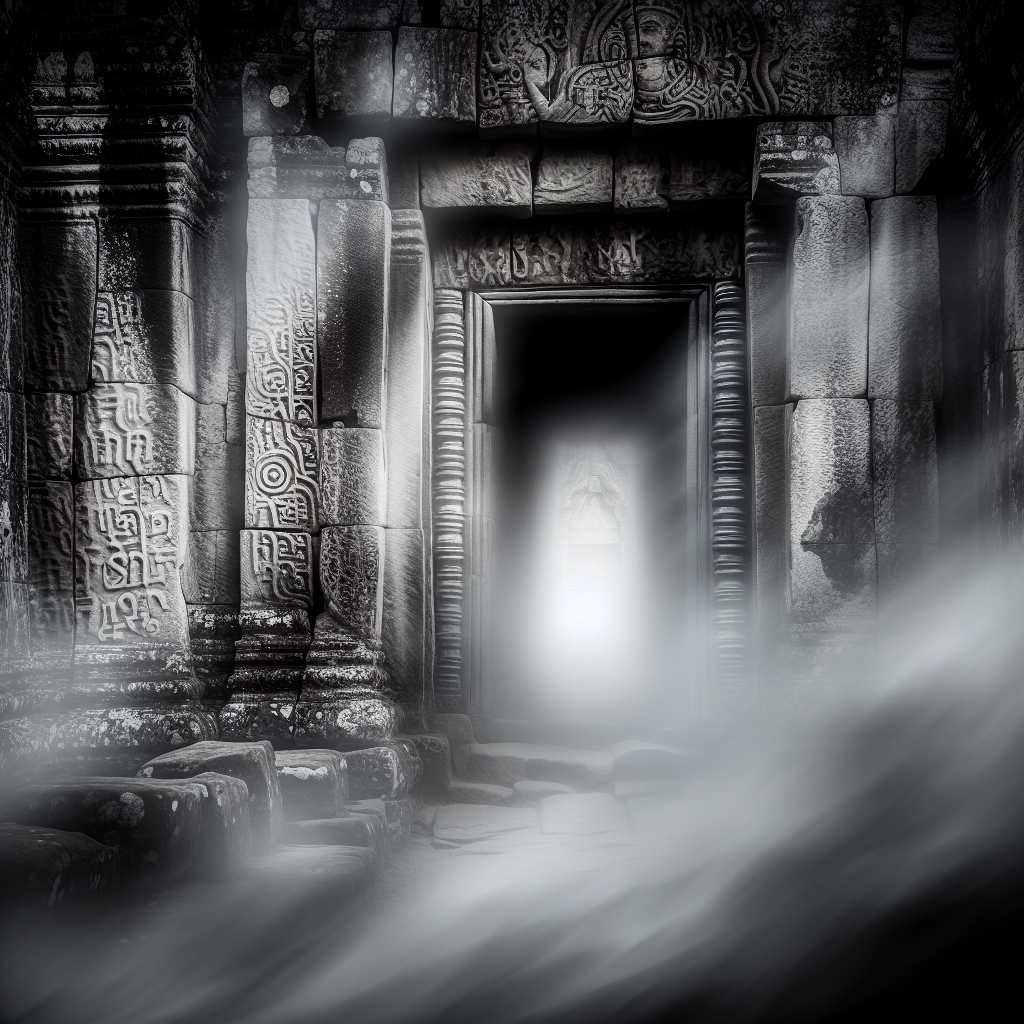
Aethermoor society was structured around a complex caste system based not on birth, but on one's ability to perceive and manipulate ethereal energy. Those with the strongest abilities, known as Luminarcs, served as both scientists and spiritual leaders, guiding the civilization's technological and cultural development. Below them were the Crystallographers, skilled artisans who grew and shaped the crystals that powered their society.
The Aethermoor placed tremendous value on education and scientific inquiry. Every citizen, regardless of their caste, received extensive training in mathematics, astronomy, and energy manipulation. Their libraries, though largely lost to time, are said to have contained thousands of scrolls documenting their discoveries and philosophical insights.
Architectural Marvels
The floating crystal towers of Aethermoor remain their most famous legacy. These structures, some reaching heights of over 300 feet, were constructed from a unique crystalline material that responded to ethereal energy fields. The largest of these towers, known as the Celestial Spire, reportedly housed the empire's greatest library and observatory.
Equally impressive were their bioluminescent gardens - carefully cultivated ecosystems where genetically modified plants produced light without heat. These gardens served both aesthetic and practical purposes, illuminating the city while purifying the air and providing food. Modern botanists have found traces of these engineered species, though none survive in their original form.
Technological Achievements
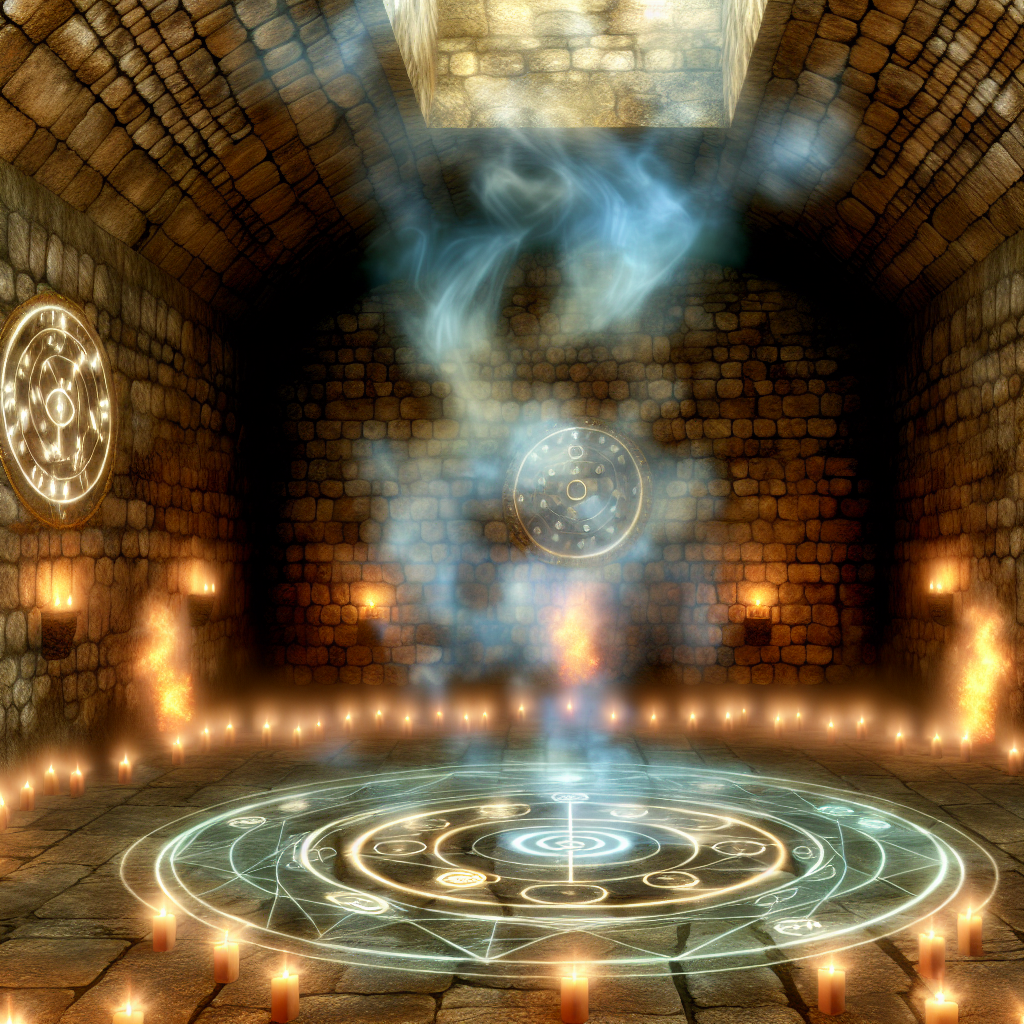
Beyond their architectural wonders, the Aethermoor developed sophisticated technologies for energy storage and transmission. They created networks of crystal conduits that distributed power throughout their cities, eliminating the need for combustion-based energy sources. This clean energy system allowed them to maintain a highly advanced civilization with minimal environmental impact.
Their understanding of optics and light manipulation was equally advanced. They developed optical communication systems using precisely cut crystals to transmit messages across vast distances instantaneously. They also created elaborate holographic displays for entertainment and education, technology that wouldn't be replicated until thousands of years later.
Historical Timeline
Foundation of the Aethermoor Empire; discovery of ethereal energy manipulation
Construction of the first floating crystal tower; establishment of the Luminarc Council
Golden Age begins; peak of technological and cultural development
Completion of the Celestial Spire; expansion of bioluminescent garden networks
First signs of decline; ethereal energy fields begin to weaken
Final collapse of the empire; massive exodus as floating structures fail
Decline and Fall
The decline of the Aethermoor Empire began around 600 BCE when the natural energy fields they depended upon started to weaken. Modern geological surveys suggest this was caused by tectonic shifts that altered the electromagnetic properties of the region. As their power source diminished, the Aethermoor faced an existential crisis.
Despite desperate attempts to find alternative energy sources, the civilization could not adapt quickly enough. By 400 BCE, most of their floating structures had collapsed, and the surviving population scattered to neighboring regions. Some scholars believe small communities of Aethermoor descendants may have survived for several more centuries, preserving fragments of their knowledge, but no definitive evidence has been found.
Modern Discoveries
Archaeological excavations in the Eastern Heights region have uncovered extensive ruins of Aethermoor settlements. Among the most significant finds are intact crystal matrices, dormant but still responsive to electromagnetic fields. Analysis of these artifacts has revealed a sophisticated understanding of quantum mechanics and energy manipulation that was far ahead of their time.
Recent expeditions have also discovered sealed chambers containing preserved samples of their bioluminescent plants and detailed technical documents. These findings have sparked intense scientific interest, as understanding Aethermoor technology could lead to breakthroughs in clean energy and sustainable urban design.